Partnerships: What happens when government works hand-in-hand with citizens and communities.
A Place for Seniors to Connect: Inside Reunion Social Space at the National Museum
14 May 2026
What if a museum can offer more than insights into history and heritage? Reunion Social Space (Reunion) brings heritage, conversation, and inclusive design together to support well-being and connection.
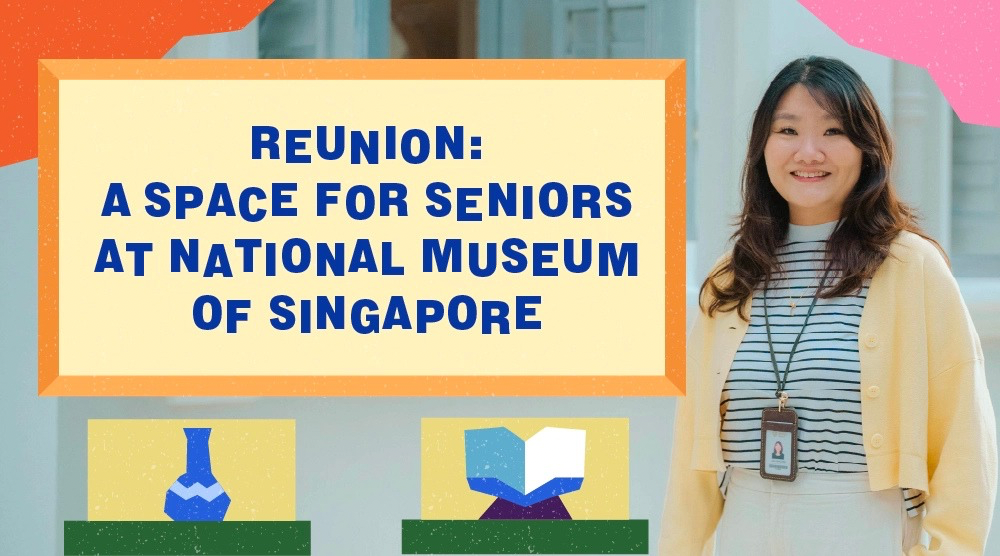
What if supporting seniors is as simple as a welcoming environment, meaningful conversations, and the quiet assurance of knowing that someone else understands? Not every space that supports seniors needs to look like a clinic or classroom.
That is the idea behind Reunion at the National Museum of Singapore: the nation’s first dedicated senior social space in a museum where seniors can connect through heritage, conversation, and thoughtfully designed programmes. Launched in 2023, Reunion is an exploratory space where a museum places itself within Singapore’s larger ageing conversation.
“The work at Reunion Social Space is exciting and meaningful,” says Clara Ang, Senior Manager (Programmes) at the National Museum. “The museum sits at the intersection between theories, policies, and ground practices. Our programmes can be seen as testbeds for experimenting with non-medical interventions to address ageing issues.”
Reimagining museum spaces for seniors’ well-being
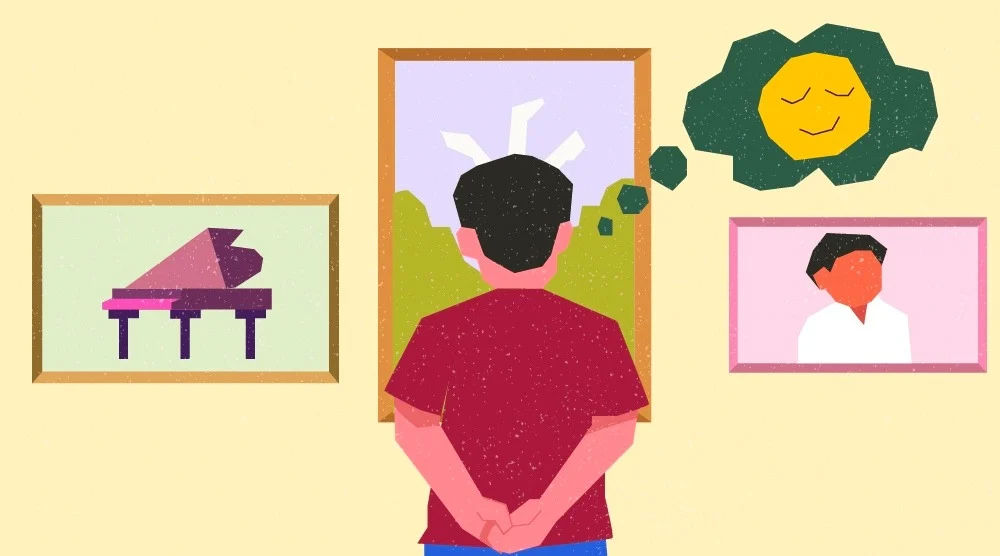
One of Reunion’s goals is to re-introduce culture and heritage to engage seniors and keep them active through memories, objects, stories, and shared meaning. Including these elements in offerings can be especially powerful for seniors, including those living with dementia and Mild Cognitive Impairments (MCI).
“As a museum, we can provide heritage-centred interventions by drawing on our spaces, collections, and exhibition,” Clara explains. “To be able to do this also means tapping on interdisciplinary approaches and lenses and working with diverse stakeholders.”
In practice, museum content becomes a springboard to spark connection between participants, encourage intergenerational exchange, and create bridges between past and present.
Designed with seniors, for seniors
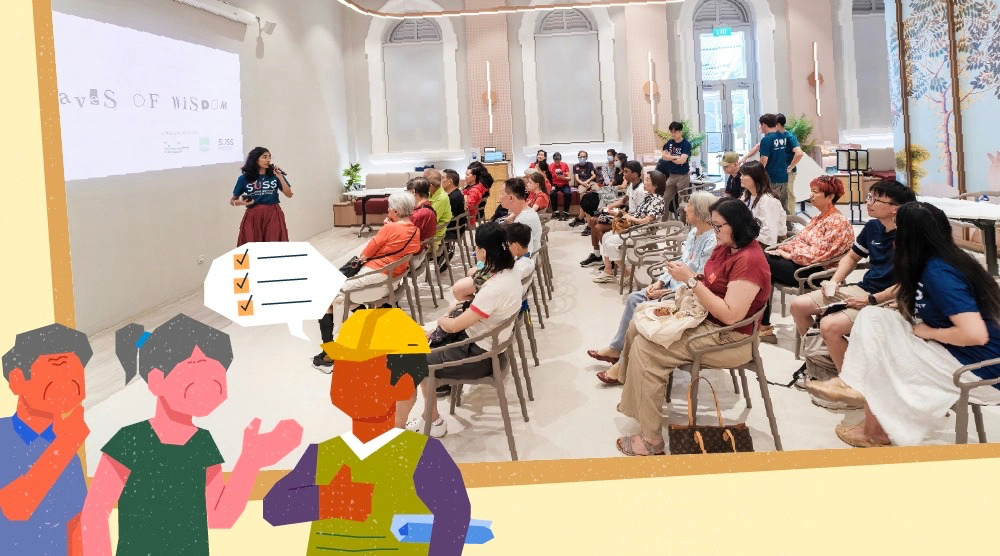
From the start, Reunion was shaped with seniors. In the first iteration, the National Museum worked closely with founding partners Lien Foundation and RSP Architects Planners and Engineers.
“Throughout the design process, we leveraged the institutional expertise of our partners, and engaged over 120 stakeholders, including seniors, caregivers, and professionals from the medical and social care sectors,” Clara recalls. “These interactions enabled the creation of a functional space that serves our intended users and programmes.”
Reunion is a calm, reassuring space, but making it all work takes high energy and constant juggling. For Clara, the notion of a “typical workday” does not apply.
“I could be running from meetings discussing heritage and museum content, to having meetings and site visits with stakeholders,” Clara describes. “Or running around helping to push wheelchairs, singing and dancing with seniors, or racking my brain in the galleries wondering how to translate the information in English into a vernacular language!”
There is also a continual balancing act: piloting and refining in real time, learning quickly from what happens on the ground, and stabilising what works, because much of this work is still relatively new in the local context. The work is challenging but rewarding.
“What keeps me going are the smiles on our participants’, partners’, and volunteers’ faces when they experience the joys of the space and the programmes that all of us create together,” she shares.
Building confidence, measuring what matters
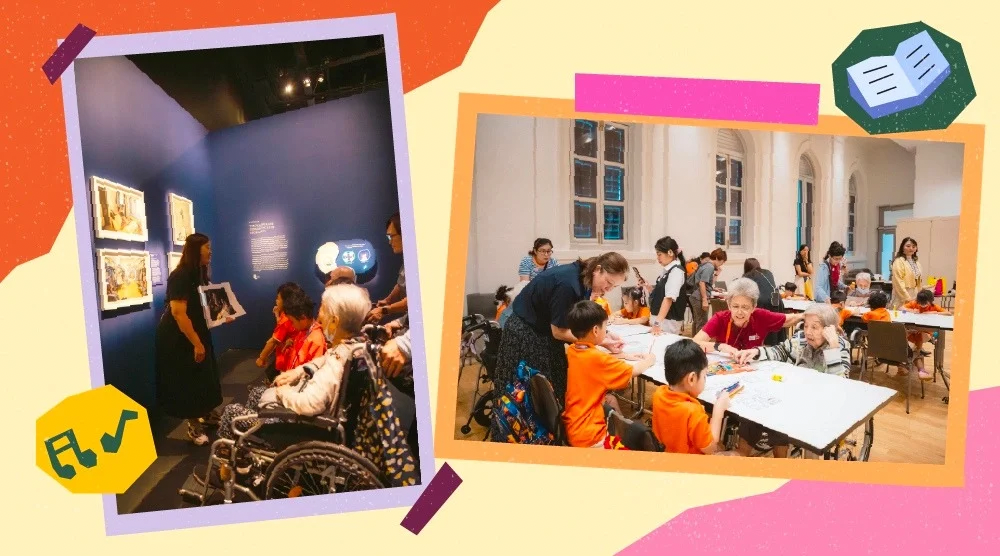
A senior-friendly space needs people who can bring it to life. Building on existing senior programming, the National Museum enhanced training for staff and volunteers to better support seniors.
A dedicated volunteer group, Care Facilitators (CFs), was recruited to strengthen the museum’s care initiatives. CFs guide seniors, including persons living with dementia and MCI, as well as their caregivers on conversational gallery tours, and support programmes within Reunion. Through training, CFs build essential skills in senior engagement, helping seniors feel seen, safe, and able to participate on their own terms.
To keep improving, the National Museum gathers feedback through a streamlined, senior-friendly system. The museum has also commissioned Duke-NUS Centre for Ageing Research and Education to examine the outcomes of Refresh and Reconnect, a flagship six-week programme positioned as a place-based, non-medical intervention for seniors with mild cognitive impairment.
What impact looks like
The impact of Reunion has been tangible.
“We are heartened to observe how seniors participating in programmes such as Refresh and Reconnect have grown more confident,” Clara says. “One of our healthcare partners shared an especially memorable moment during a session on local heritage. A senior lit up upon seeing a photo of a kampung and eagerly shared her childhood memories.”
Moments like these sparked lively discussions, as each senior became excited to share their life stories with the group. Persons living with dementia tend to recall experiences better when they are meaningful and touch them in a special way, and this is how the museum tries to deepen engagement with them.
Reunion’s strength, the team emphasises, is responsiveness. Observations from Care Facilitators volunteers and caregivers inform refinements, keeping sessions meaningful while maintaining quality. Over time, Reunion has also broadened its scope to include active agers and seniors with intellectual disabilities, while continuing to foster intergenerational exchanges.
The Reunion space closed in 2026 to make space for the National Museum’s larger restoration works as a national monument. “When the Reunion Space reopens in 2027, we hope the community will continue to embrace it as a welcoming environment where seniors can visit with confidence, maintain vital social connections, and discover new learning opportunities with other generations” Clara shares.
If there is one idea Reunion keeps proving, it is that heritage is not only about what we preserve, but also what we make possible together, in the present.