
Growth Journeys: From first steps to new heights—how officers grow their careers.
Be the Colleague Everyone Wants on Their Team: Here’s How
4 September 2026
Some colleagues make teamwork feel effortless. Here are eight small but powerful habits that build trust, reduce friction and make you someone others genuinely want on their team.
.webp)
Every workplace has them: colleagues who make work feel easier.
They are not always the most senior person in the room or the loudest voice in a meeting. But projects move faster when they are involved. Conversations become clearer. Problems get solved with less back-and-forth.
What sets them apart is not charisma or popularity. It is a set of everyday habits that reduce friction, build trust and help everyone around them do their best work.
#1 Be reliable, especially in the small things.
Trust is not built during a crisis. It is built in small moments beforehand: replying when you said you would, turning up prepared (and on time), sending the file you promised, or flagging it early when something may be delayed.
These actions may seem minor but together they answer the million-dollar question: Can I count on you?
Takeaway: Build the habit of doing what you said you would do.

#2 Keep the conversation moving.
Not every message can be resolved immediately. But that does not mean it should disappear into silence.
A simple message such as "I've seen this and will get back to you tomorrow" reassures colleagues that the work has not been forgotten. Often, people are not expecting an immediate solution. They are looking for certainty that someone is taking ownership.
Takeaway: Acknowledge first and resolve second. It is okay to respond even if you do not have the answers yet.
#3 Share what you know.
Information that sits with one person can become a bottleneck, especially when teams work across functions. Colleagues who reduce friction share resources and pass on lessons learnt. They understand that helping others succeed strengthens the whole team.
Takeaway: Make useful information easy to find and use for your colleagues.

#4 Work with empathy—recognise that everyone has different bandwidths.
Every request feels urgent to the person making it. But good collaboration means recognising that colleagues are juggling their own priorities, deadlines and constraints.
You don’t need to say “Yes” to every request, especially when the request cannot be met realistically. Likewise, be empathetic towards colleagues who may be juggling multiple deadlines. This means discussing priorities openly and agreeing on timelines that are realistic for everyone involved.
Takeaway: Make it a habit to check in with your teammates on their bandwidths before committing to a deadline, not after.
#5 Be generous with credit.
Good work is rarely the effort of one person. Yet contributions can easily disappear when only the final presenter is visible, or attention is drawn to the loudest voice.
Be generous in giving credit. Make it a point to name the people who helped shape an idea, solve a problem, or keep the work moving. This builds trust and encourages others to contribute openly.
Takeaway: Recognise contributions, especially when the person is not in the room to claim it themselves.

#6 Challenge ideas, not people.
Healthy teams need disagreement, and healthy disagreement improves ideas before they become problems. But disagreement becomes damaging when people attack motives, dismiss contributions, or try to win the argument at someone else’s expense.
Instead, focus on the idea, not the person. Ask questions, explain your reasoning, and leave room for the possibility that you may be missing something.
Takeaway: You can be direct without being disrespectful. Try saying, “I see this differently because…”.
#7 Take responsibility early.
Everyone makes mistakes. What matters is what happens next.
Instead of shifting blame, hiding errors, or spending more time being defensive, acknowledge the mistake, explain the impact clearly, and take responsibility for the next step. This shows accountability and gives everyone confidence that the issue is being addressed.
Takeaway: Acknowledge the mistake, fix what you can, and explain what you will do differently next time.
#8 Close the loop.
Uncertainty often lingers because nobody knows whether something has been completed. This creates unnecessary follow-ups and slows progress.
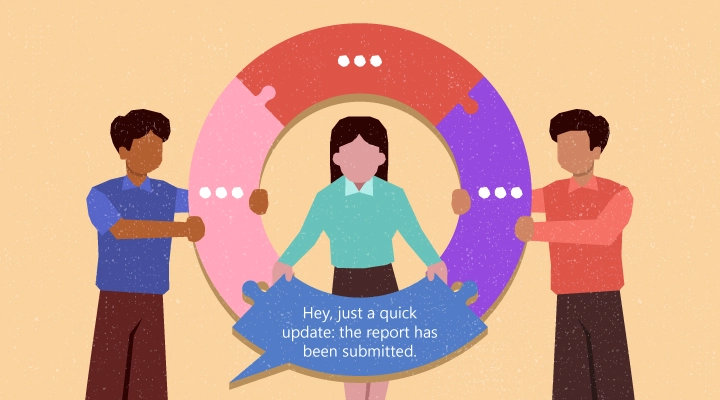
A quick update that a report has been submitted, feedback incorporated or an issue resolved saves colleagues from chasing for answers and gives them confidence that work is moving forward.
Takeaway: Do not make colleagues chase for closure. Once the work is done, send a clear update.
Become the colleague people want on their team
These habits may seem small, but they quietly shape how colleagues experience working with you. Over time, they build something that is difficult to earn and easy to lose: trust.
And in almost every workplace, trust is what makes good work possible.