New Ways of Working: Fresh ideas, smarter teamwork and better ways to get things done.
Feeling Uninspired At Work? Channel Your Inner Picasso
7 January 2025
Neuroscience shows that art helps us to become more resilient, empathetic, creative, and better at problem solving. Here are five ways to get started on making art part of your work life.
Need to get into your creative flow for the next project? Time to pick up a brush and start channelling your inner Picasso.
Research tells us that engaging in art activities, whether through admiring artworks or creating your own, bestows tremendous benefits.
It helps us develop critical thinking (opens in new tab), activates the parts of our brain associated with problem-solving and creativity (opens in new tab), builds empathy (opens in new tab), improves your memory (opens in new tab), and promotes better mental wellbeing (opens in new tab). If that list isn’t long enough, findings also tell us that when you create art, you build psychological resilience (opens in new tab) as well!
Here are five ways to start incorporating art in life and at work:
#1 Pin up artworks that you love on your cubicle walls
Scientists tell us that the simple act of looking at beautiful art (opens in new tab) lights up the part of our brain associated with daydreaming, meaning-making, well-being, and imagination. Here’s a way to help your brain pause, refresh, and get inspired during a long workday: pin up some of your favourite artworks on your cubicle walls or comics to inject some light-heartedness and humour at work.
#2 Integrate art in problem-solving at the workplace
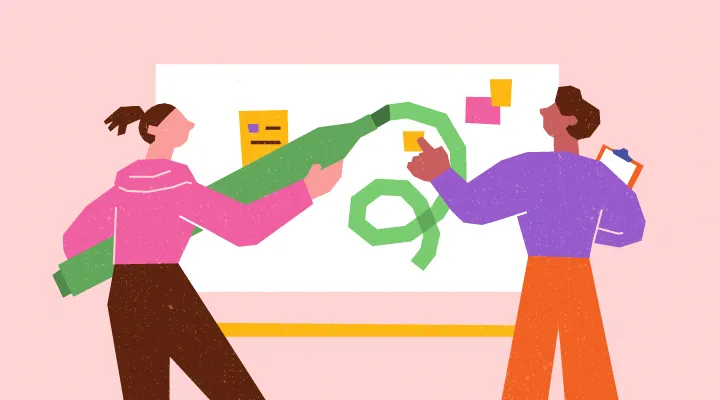
Use art as a tool during brainstorming discussions (opens in new tab) with your team. Prepare collaborative tools such as whiteboards, flipcharts, and markers. Create mind maps or visual storytelling (opens in new tab) to help your team draw out their ideas, solutions, and challenges. This makes it far easier to visualise concepts, think out of the box, and co-create solutions.
#3 Use art to manifest your personal and professional goals
Instead of making a list of goals for the year, try creating a vision board with an artistic timeline with milestones for your aspirations in life and at work. Psychologists tell us that vision boards help us gain more clarity and self-awareness and reflect on what is important to us, and in the process aid us in imagining a more positive future.
Compared to lists which are linear, a vision board allows you to freely explore your goals and map out associations such as motivations, challenges, priorities, and what you need to do to achieve your goals. For more inspiration, draw little rewards to be awarded when you hit milestones.
#4 Join an art workshop or programme
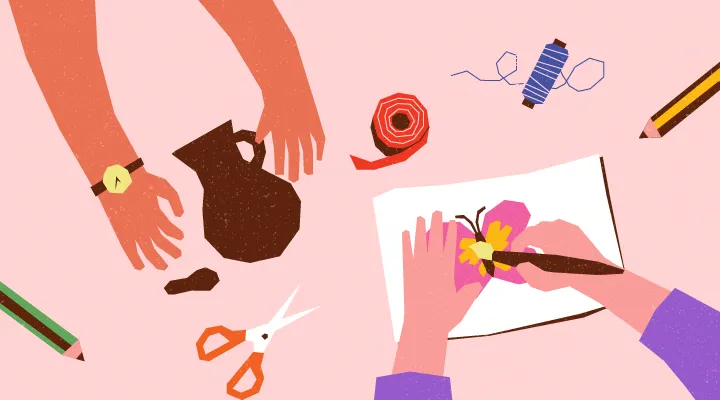
As research tells us, the process of painting, drawing, or doodling directly contributes to better mental health and stronger lateral thinking. The best part? Producing great art is not the point; the creative journey alone impacts your brain’s chemistry (opens in new tab) and makes you a happier and calm person.
But if you would like to go beyond colouring books and drawing stick figures, art courses are quite accessible in Singapore. Unsure of where to begin? Browse through courses from calligraphy and watercolour to ceramics and oil painting by the People’s Association (opens in new tab). Or cultivate mindfulness via National Gallery Singapore’s Slow Art programme (opens in new tab).
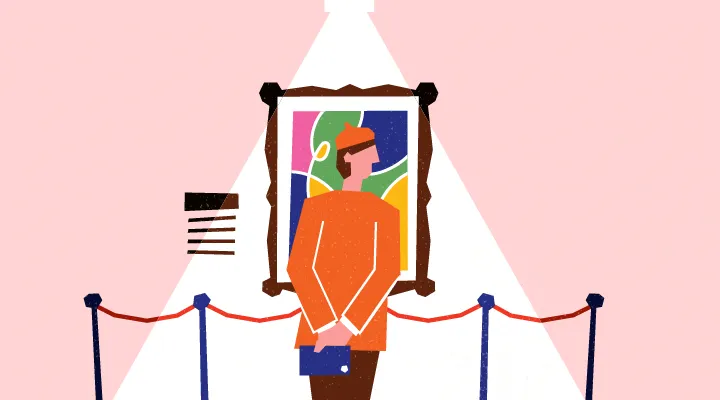
#5 Make time for art appreciation
Singapore is one of the most happening art hubs in Asia, so capitalise on that and make time for art events and activities. For a start, drop by the National Gallery Singapore and Singapore Art Museum, look out for street and public art, and visit independent art galleries around the island.
Arts events happen around the year as well. For example, the Singapore Art Week held from 17 – 26 January 2025) (opens in new tab) had lined up the iconic annual Light to Night Festival and thought-provoking exhibitions by local and international artists.
To learn more about art programmes and events in Singapore, visit the National Arts Council website (opens in new tab).