
Partnerships: What happens when government works hand-in-hand with citizens and communities.
How NParks Built Singapore’s Biggest Skate Park
21 April 2026
What does it take to build a national skatepark that youths actually like? An innovative mindset, five years of stakeholder engagement, and meeting the community’s needs
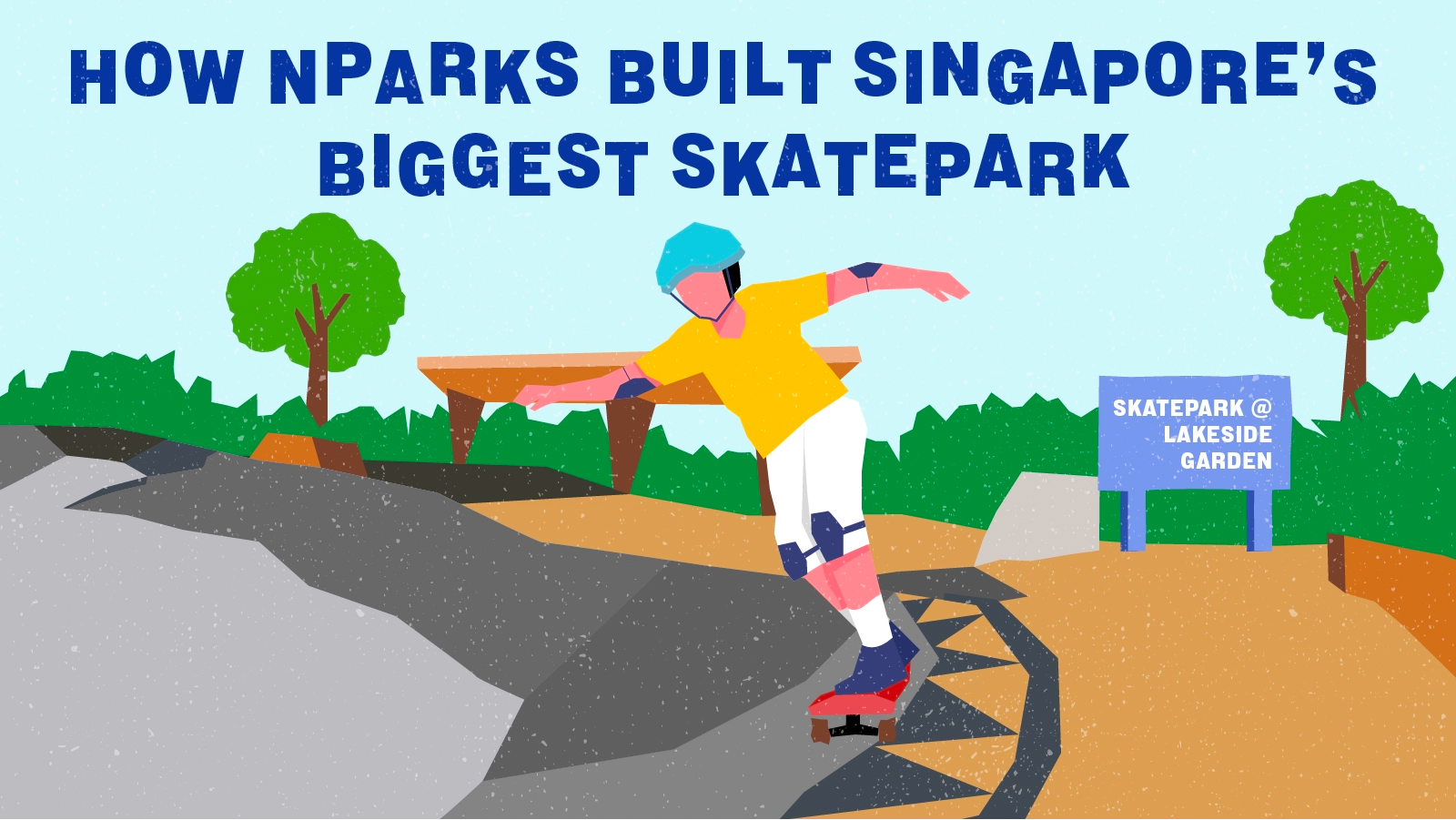
Jerome Chew never imagined he would spend part of his workday debating skate ramp curvature. But that is what happens when you are helping to build Singapore’s biggest outdoor skate park.
A civil engineer by training, Jerome is Deputy Director of Development Management at the National Parks Board (NParks), where he leads teams of consultants and contractors through the full journey of park projects.
And then came a project that pushed his team into new territory.
Set within Jurong Lake Gardens, the 17,000-square-metre (opens in new tab) SkatePark @ Lakeside Garden, opened in 2023, adds a shot of adrenaline to the national garden, pairing an event-grade skate park with a dedicated parkour zone and bouldering wall.
The timing was spot-on. Extreme sports has been gaining ground worldwide, with skateboarding making its Olympic debut in 2020. Singapore has been riding the wave too. More recently, Singapore fielded skateboarders for the first time at the 2025 SEA Games in Thailand.
For Jerome, that is exactly why purpose-built spaces like this matter: when you design with users, you create the conditions for the sport and the community around it to grow.

Meeting the Community’s Needs
From the start, Jerome and his team had one rule. “We didn’t want a white elephant,” he says. “Something that didn’t meet real needs and ended up sitting empty.”
That risk was real. NParks is known for trails, trees, and gardens. Turning an idea into a place people would love meant listening early, and listening well.
“I’m not a skater,” Jerome admits. “But I’d worked on projects like Chestnut Nature Park, which has mountain biking and BMX features. That taught me the importance of involving the right communities from the start.”

This led the team to take to the design, blending nature with active recreation, hoping to make green spaces more inclusive and attractive to different community groups.
Over five years, the team worked with grassroots organisations, youth groups, and more than 180 members (opens in new tab) from skateboarding, BMX, inline skating and parkour communities. NParks ran public townhalls, focus groups, and design consultations, and even brought in overseas experts to benchmark the facility against international standards, all while keeping in mind the themes of nature, play, and community.
Community input shaped almost everything—skatepark features, how to balance skill levels and intricacies of the skate park design including size and types of features, safety buffers, spatial layout, facilities, and the integration of landscape elements. The vision extended from creating a skatepark to developing a unique “skatepark in a garden”, which integrates hardscape and softscape elements to transform what could have been a stark concrete facility into a lush and vibrant community space where urban recreation and nature coexist harmoniously.
Even during construction, the involvement did not stop. User groups were updated on the progress at regular intervals and were also invited for trial runs prior to opening, so that they could suggest tweaks.
Tight Lines, Tough Calls
Building a shared space necessitates a fine balancing act.
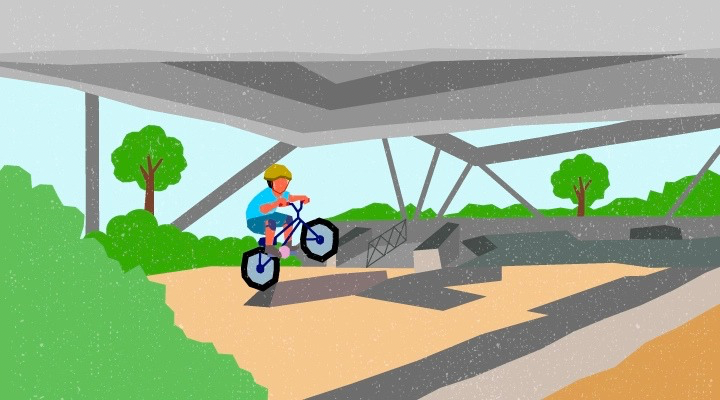
BMX and skate scooter riders wanted jump features for height and airtime. Skaters wanted street and transition features for skill progression, flow, and creative expression.
“At times, we had to step in as project owners and make the call,” Jerome says. “You can’t satisfy every niche, but you can take a broader view of what benefits the larger public and community.”
Requests came in for a fully sheltered skatepark. NParks had to balance that with its aim to minimise hard structures and keep the garden and park spaces lush, green, and open.
The team found a middle ground: providing shelter for one main skate pod to address user needs, whilst extensively softening the structure with strategic planting that would seamlessly blend it into the surrounding landscape. This approach ensured the facility would feel less stark within the garden setting.
And then came the final stretch: workmanship. “The curves, the surface finish—everything had to be perfect,” says Jerome. “Even a small bump can be dangerous when someone’s moving fast.” To meet those standards, NParks worked with specialist consultants who understood the demands of extreme sports infrastructure to provide guidance and oversight throughout every phase of the implementation works.
After the Concrete Sets
“The payoff came when I saw young skaters tear through the bowls for the first time,” Jerome recalls. “It’s like a chef watching someone savour their food. All those long nights, it clicks when you see someone land their first trick.”
Since opening, Skate Park @ Lakeside Garden has become a home base for local extreme sports communities and has even hosted international competitions, thanks to its event-grade design.
“What started as a community dream is now a regional destination,” Jerome says.
The project stretched him professionally. “It pushed me in every direction—technical design, stakeholder engagement, problem-solving. I’m a more versatile and confident project manager now,” he shares.
It also reinforced why he chose public service as his career: “Every decision you make affects someone’s life. When you take that seriously, the meaning of the work follows.”
Looking ahead, Jerome sees the skate park as a new kind of civic space—built with the community for fellow Singaporeans to enjoy.
“It’s not just about ramps and rails,” he says. “It’s about building connections and creating a space the community can call its own for years to come.”