Partnerships: What happens when government works hand-in-hand with citizens and communities.
Keeping AI’s Water Impact Sustainable Through Partnership with Industries
12 May 2026
As AI drives demand for more data centres, PUB engineer Ken Chan is working to ensure digital growth does not come at the expense of Singapore’s water security.
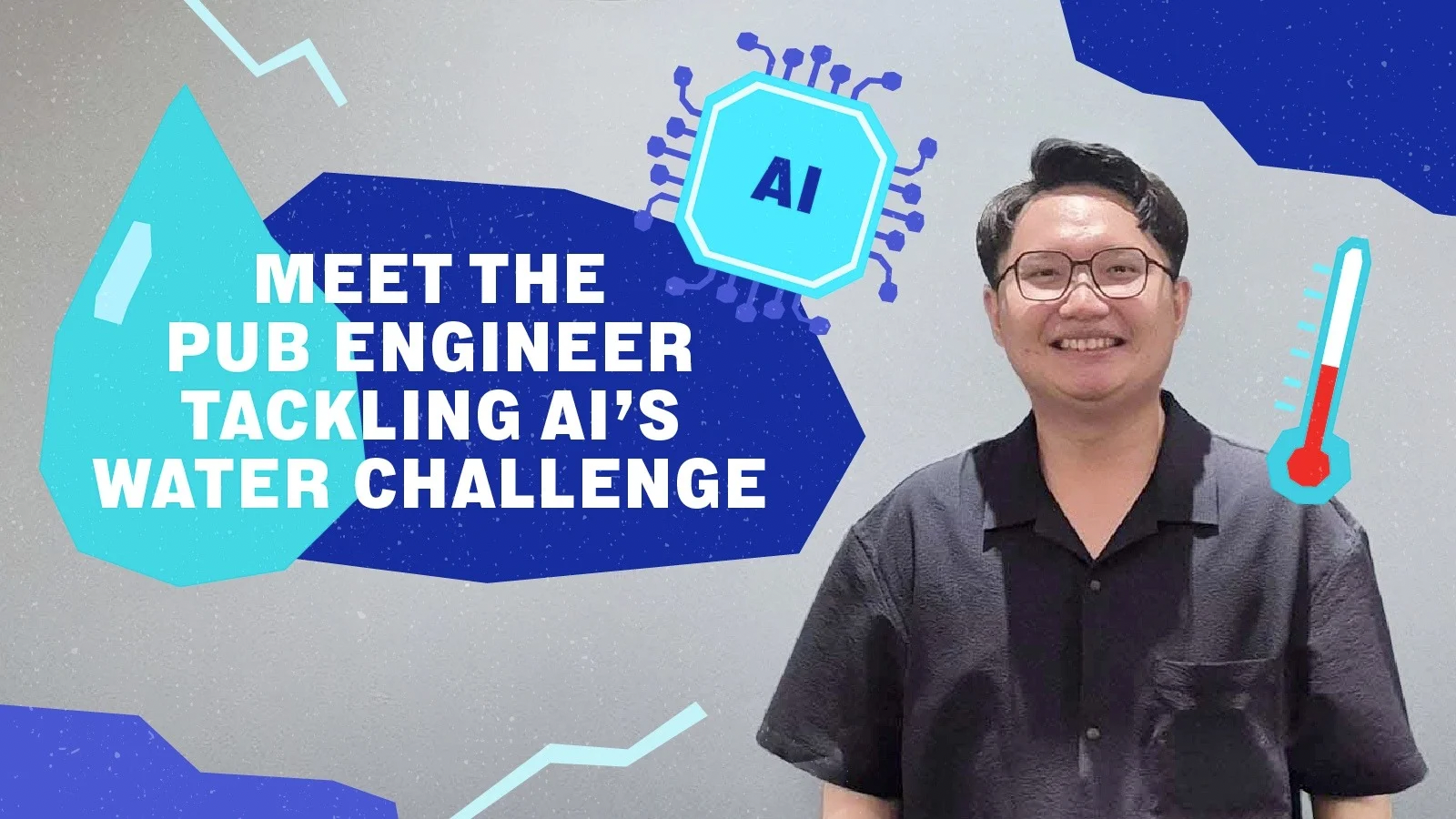
Artificial Intelligence (AI) may run on chips and code, but it also runs on something far less visible: water.
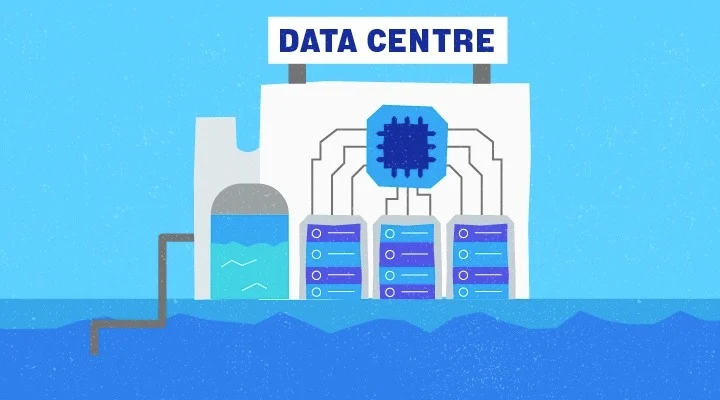
Behind every fast answer and smart tool is a data centre working hard to stay cool, often using significant amounts of water. In Singapore, where every drop matters, that creates a new kind of challenge: how to support digital growth without compromising long-term water security.
For Ken Chan, an engineer at PUB, Singapore’s National Water Agency, this challenge has become an increasingly important part of his work.
While many people may imagine water engineers working on reservoirs or treatment plants, Ken operates in a less visible space: partnering industries to use water more efficiently and plan for future demand.
Balancing digital growth with water security
PUB has long worked with businesses to improve water efficiency. But the task has become more pressing. From about 440 million gallons per day (mgd) today, daily water demand is projected to almost double (opens in new tab) by 2065, with about two-thirds expected to be from the non-domestic sector.
Now, the rise of AI and data centres is adding a new dimension to that challenge. “AI adoption has driven massive demand for computing power, which requires more data centres,” says Ken. “We should ensure that Singapore’s water security continues to be safeguarded alongside economic growth.”
Data centres require a continuous supply of water for cooling purposes. This demand is driven by IT load and system design, unlike most industrial facilities where water use is process-based and may increase or decrease depending on the output.
That is why planning ahead matters. PUB takes into consideration future water needs from the industry and collaborates with enterprises early to manage the demand.
Ken explains how PUB does this, “We monitor industry developments closely and maintain regular engagement with businesses to stay current with market trends and ground sentiments.”
Partnering businesses on a different level
New challenges call for transformed ways of working.
For PUB, talking to companies early, while they are still planning their infrastructure, has become a core part of water efficiency efforts.
“Companies would come to us for guidance on managing their operational water demand. We would work closely with them to see how water use can be optimised,” says Ken.
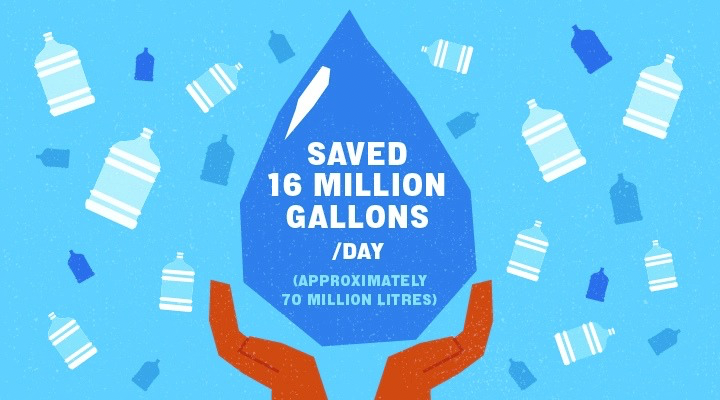
Since 2007, PUB has approved more than 380 applications under its Water Efficiency Fund (WEF), which help companies take up projects to reduce their water consumption. These projects have resulted in significant savings, with up to 16 million gallons per day (approximately 70 million litres) of water.
To Ken, that is what water efficiency is really about: not holding industries back through regulations, but helping them grow in a smarter, more sustainable way.
That often involves navigating trade-offs. A cooling system that uses less energy may need more water, while one that saves water may use more energy. “We need to consider both, since both energy and water security are critical to Singapore,” says Ken.
Driving innovation
As water security climbs higher on the agenda, businesses are becoming more open to fresh ways of saving water.
Part of Ken’s job is to work with Water Efficiency Managers across different industries to spot promising ideas and help move them forward. Some have delivered impressive results.
Ken highlights, “One project that impressed me was a non-chemical-based water treatment system. Typically, water treatment for cooling towers requires chemical dosing to keep the towers running, which limits the amount of used water that can be recycled. This project enabled the company to improve the water efficiency by 15%.”
Every drop counts
For Ken, this work has changed the way he thinks about water.
“I used to see water as just a biological necessity,” he reflects. “Now I understand it’s essential for keeping our world functioning.”
That change in perspective speaks to what really is at stake. Water security is not just about ensuring supply. It is about making sure Singapore can continue to grow, innovate, and support new industries without taking a vital resource for granted.
Even with the constraints Singapore faces, Ken remains confident about our water future. “We have robust water supply and continuously work on demand management and R&D,” he says. “This forward-planning approach gives me confidence.”
But he is also quick to point out that water security cannot rest with PUB alone. AI may be shaping the future, but that future depends on careful planning, practical innovation, and a shared commitment to using water wisely.
As Ken puts it, “Water security is something we build together—it's a shared responsibility that requires collaboration between industry, regulators, and consumers. While our team develops new approaches for Singapore's water security, the real success comes from everyone working together to making every drop count.”

Marked on 22 March each year, World Water Day highlights the importance of freshwater and sustainable water management. Ken Chan’s work at PUB reflects that same goal: helping Singapore grow while using water wisely.