Preparing for the Future: Ideas and projects preparing Singapore for what’s next.
Reinventing the Passport Collection Journey
7 September 2026
At the new ICA Services Centre, passport collection can take about five minutes. Behind that simple experience is a major rethink of service delivery, powered by robotics, biometrics, automation and officers trained for more complex, human-centered work.
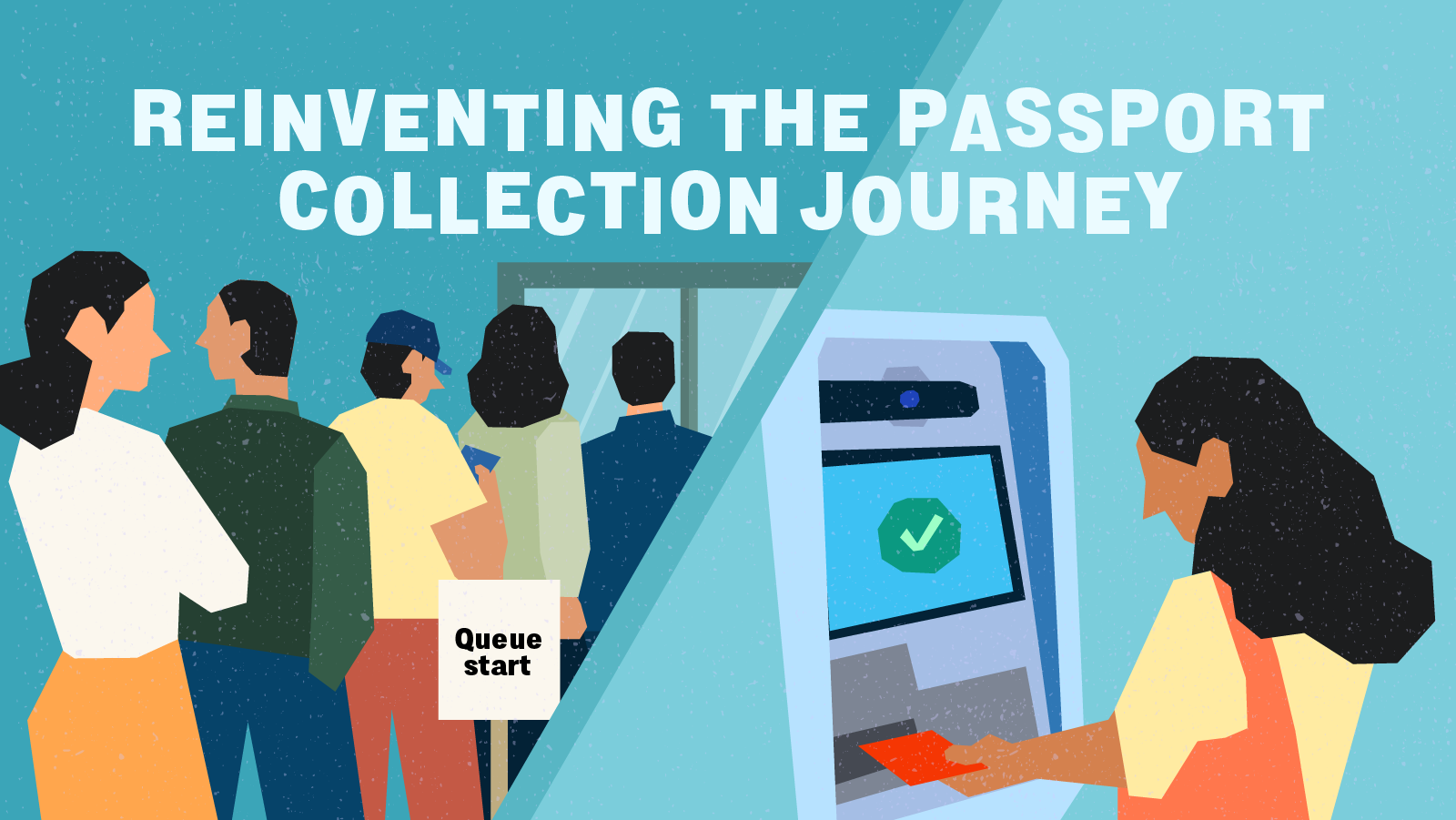
Not so long ago, collecting a passport could very well mean taking up half of our day at the old Immigration & Checkpoints Authority (ICA) building.
That has become a thing of the past since the new ICA Services Centre (ISC) went operational in April 2025. Passport collection now takes just five minutes.
But the real transformation is not just the shorter wait. Behind that five-minute collection is a major rethink of how ICA delivers its services.
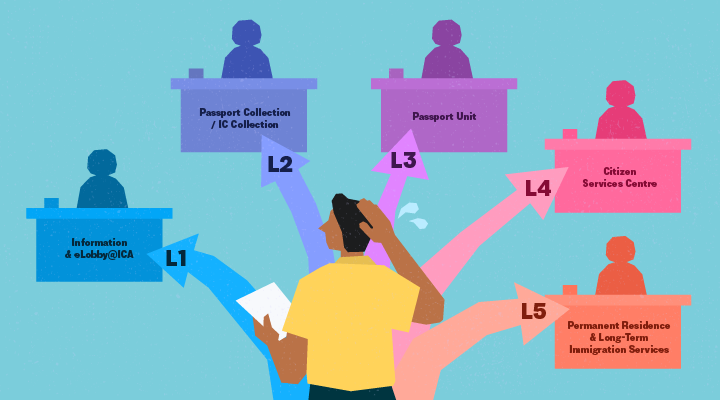
Combining Five Floors into A Single Touchpoint
“We have redesigned our processes and reorganised our structure from a product-centric to a function-centric model,” explains Gerald Woo, Deputy Superintendent, ICA.
In practice, this means designing services around real-life needs.
A family applying for passports, for instance, may also need help with residency matters or replacing a lost identity card. In the past, that required moving between different counters and floors.
At the new ISC, information services are integrated on one level, while service rooms are equipped to handle multiple products. Customers can now complete several ICA transactions through a single touchpoint, in one visit.
What Makes the Five-Minute Process Possible
Behind the five-minute collection time is one of ISC’s most ambitious innovations.
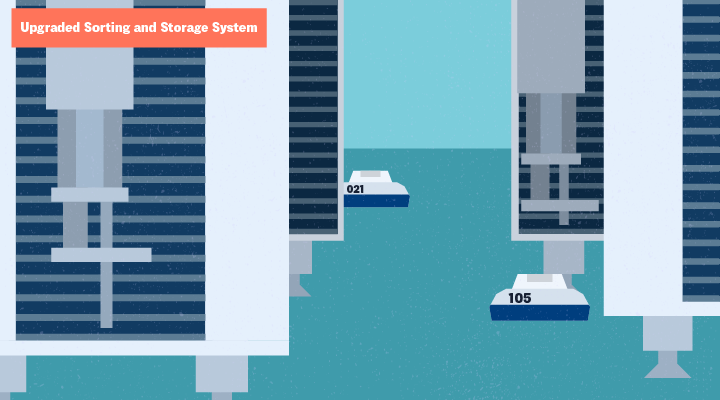
Called iSMART, the system is a tightly coordinated ecosystem of robotics, automation, and biometrics, designed to move sensitive documents securely from storage to customer accurately, sans the old manual handling.
“We now have 20 self-collection kiosks managed by just two officers, compared to the previous manual counters set-up, which required 20 officers to achieve a similar throughput,” says Gerald.
But realising this took serious engineering.
“One key challenge was optimising the routes for the robots,” Gerald explains. “This is an extremely complex process because it is not just about finding the shortest or quickest path. It is about orchestrating a dynamic ecosystem of over 100 robots moving in harmony.”
That choreography happens in real time. The robots do not follow fixed routes. Instead, algorithms continuously recalculate their paths, helping them avoid congestion, respond to obstacles, and prioritise urgent deliveries.
“We carried out large-scale simulations to optimise routing, alongside fine-tuning of robotic arms and storage systems so that motors, sensors, and retrieval mechanisms operated with precision and reliability,” Gerald says.
Together with predictive modelling, real-time monitoring, and stress testing, these efforts created a robust system where robots, software, and storage infrastructure work as one.
Smarter Systems, Better Jobs
When machines take over manual work, officers are freed up for higher-value work.
“Instead of spending time pushing metal trolleys to and from storage areas and sorting documents alphabetically by hand, our officers are now cross-trained to help them transition into broader, more integrated service roles,” shares Gerald.
At ISC, officers are progressively trained in areas such as customer service, problem-solving, and digital systems.
With stronger communication skills, officers are better able to understand customers’ needs, guide them through processes and provide support.
“Such training has enabled officers to manage cases more holistically and effectively, particularly for complex or exceptional cases that require human judgment,” Gerald says.
Digital-First, Not Digital-Only
A smart service centre is only smart if it works for everyone. That is why ICA’s approach is “Digital-First, but not Digital-Only”.
While more than 95 per cent of customers independently transact with ICA digitally, ISC also caters for those who require assistance via initiatives like iAssist, a dedicated space within ISC. Service Ambassadors are also on hand to provide help.
Geralds shares further, “We also continue to collect cash payments. This ensures that we uphold inclusivity and accessibility, recognising that not all individuals may not be ready or able to adopt digital methods.”
Inclusivity is built into the smaller details too.
Before the launch, ICA had tested the self-collection kiosks with users from different backgrounds leading to improvements such as visual cues to mark correct slots for specific documents.
“The kiosks are also designed with inclusivity in mind with features such as adjustable heights and clear visual instructions to cater for wheelchair users and seniors,” adds Gerald.

Keeping Humans in the Loop
The public sees a passport collected in five minutes. Behind it are years of planning, process redesign, and interagency collaboration, with ICA working closely with the Home Team Science and Technology Agency and GovTech, bringing together operational, technological, and security expertise.
“Looking ahead, the next frontier for ICA’s service transformation is to harness AI and digital technologies to provide an even better service experience,” says Gerald.
Even so, ICA’s principle remains clear: technology supports work, but people remain accountable.
“Processes will still be anchored by a human-in-the-loop approach, where officers continue to perform the final layer of approval, ensuring that decisions remain robust, accountable, and grounded in human judgement."
At ISC, that is what the future of public service innovation looks like: machines and humans working together to deliver service that is faster, smarter, and human-centred.