Partnerships: What happens when government works hand-in-hand with citizens and communities.
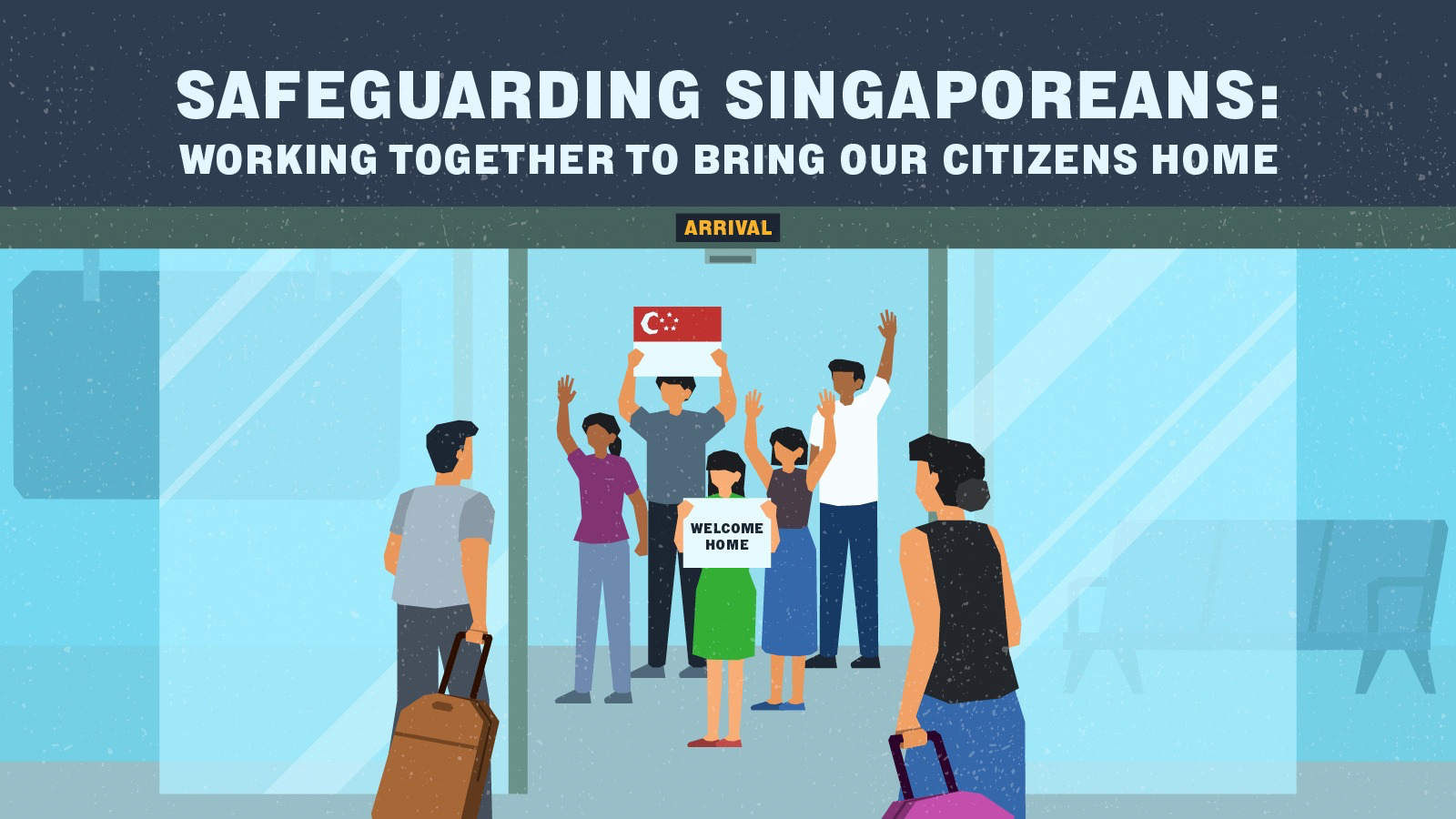
Safeguarding Singaporeans: Working Together to Bring Our Citizens Home
19 May 2026
As conflict disrupted air routes and left Singaporeans stranded across the Middle East, Singapore’s government agencies moved quickly—leveraging diplomacy, crisis coordination, and military lift—to bring our citizens home.
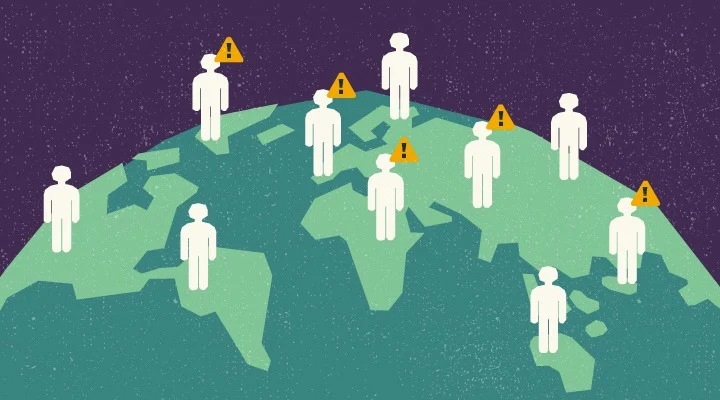
When conflict broke out in the Middle East on 28 February 2026, Singapore’s first question was—where were its citizens in the region, and who might need help getting home?
Flights were already being disrupted, airspace closures were becoming a real risk, and the situation on the ground was increasingly volatile. Some Singaporeans in the region recounted seeing missiles (opens in new tab) overhead. Others scrambled to secure the limited commercial flights still available, as families back home worried about loved ones caught in the crisis.
First moves
As the war unfolded, the Ministry of Foreign Affairs (MFA) quickly issued travel advice (opens in new tab) urging Singaporeans to defer all travel to Israel, Iran, and the wider Middle East. Those already in the region were told to take precautions, stay alert, and monitor local developments closely.
Singaporeans in the affected regions were also told to use eRegister (opens in new tab). The data gave the Government a live picture of where Singaporeans were across the region; who might be at risk, and who needed help getting home.
As drone and missile attacks escalated, the response quickly shifted up a gear. By 5 March, MFA had deployed Crisis Response Teams (opens in new tab) to Muscat, Oman, and was sending officers to Saudi Arabia. Consular teams and embassies worked the phones, coordinated with local authorities and raced to identify flight options for Singaporeans.
By then, the response was moved beyond advisories. It had become a live operation to bring Singaporeans home.
Team Singapore in action
Amid fast-changing and highly challenging conditions, MFA officers worked round the clock (opens in new tab) to piece together a safe route home. That meant arranging ground transport for Singaporeans scattered across the Middle East to Muscat, securing clearances, and coordinating special repatriation flights out of the region.
On the morning of 6 March, the Singapore embassy in Abu Dhabi and Consulate-General in Dubai (opens in new tab) sent off two groups of Singaporeans to Muscat. MFA officers accompanied them on the long bus rides, and in Muscat, they were received by the Singapore Embassy in Oman and an MFA Crisis Response Team, who supported them through to departure.
The first repatriation flight (opens in new tab) landed on 7 March, bringing home 152 Singaporeans and their dependents. The second flight followed the next day. Behind those safe arrivals was an intense interagency effort by Public Officers from MFA, the Ministry of Transport (MOT), the Civil Aviation Authority of Singapore (CAAS), and the Immigration & Checkpoints Authority (ICA), working across borders, agencies, and time zones.
But even as the first flights succeeded, the window for commercial flights was narrowing. One week into the war, it was clear the operation had to scale up.
Minister of State Gan Siow Huang (opens in new tab) shared, “There are Singaporeans in Qatar, Bahrain, Kuwait, Jordan, and Saudi Arabia requesting for assistance to return to Singapore. The situation on the ground also continues to be fluid. Many commercial airlines and airports are not ready to resume operations.”
On 9 March, MFA and the Ministry of Defence (MINDEF) jointly announced that Singapore would deploy an RSAF A330 Multi-Role Tanker Transport to repatriate Singaporeans from Saudi Arabia. What began as diplomatic coordination on the ground was now reinforced by military lift in the air.
The speed of evacuation was also a quiet demonstration of diplomacy at work. Singapore could respond efficiently not just because it had crisis teams and aircraft, but because it had trusted partners in the Gulf. Years of steady engagement with Oman, the UAE, and Saudi Arabia helped create the access and support needed to bring Singaporeans home.
Effectiveness in numbers
The speed and effectiveness of the coordinated response is best seen in the timeline.
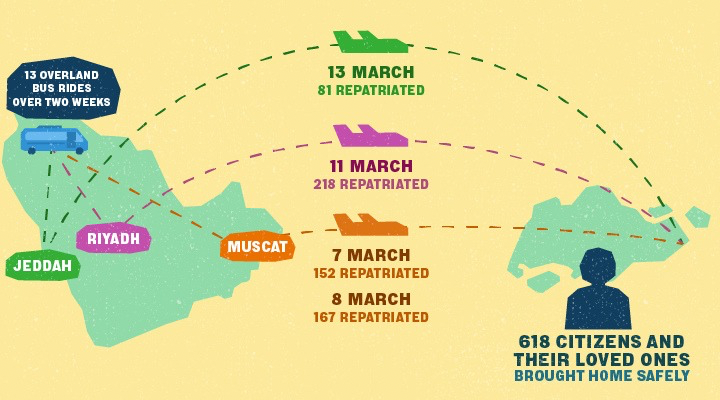
13 overland bus rides (opens in new tab) arranged by our embassies over two weeks to bring Singaporeans to Muscat, Jeddah, and Riyadh for repatriation.
7 March: First repatriation flight by Singapore Airlines arrived in Singapore from Muscat with 152 Singaporeans and their dependents
8 March: Second repatriation flight arrived from Muscat with 167 Singaporeans and their dependents.
11 March: RSAF flight from Riyadh, Saudi Arabia, returned with 218 Singaporeans and their dependents.
13 March: RSAF flight arrived from Jeddah, Saudi Arabia, with 81 Singaporeans and their dependents.
In total, the whole-of-government efforts brought home safely 618 citizens and their loved ones within two weeks of the war’s outbreak.
A coordinated citizen-centric, Whole-of-Government operation
At the height of the crisis, it was a race to get Singaporeans and their loved ones out safely.
On the ground, MFA officers worked to guide evacuees through uncertain and fast-changing conditions, securing safe passage to departure points. In the air, MINDEF officers checked on passengers, from elderly travellers to young children. The operation had to be fast, but it was also calm, coordinated, and reassuring.
What made that possible was the way different parts of government synchronised. MFA brought diplomatic networks, overseas missions, and consular systems. MINDEF brought aircraft, crews and operational readiness, while MOT, CAAS, and ICA helped make sure transport arrangements and clearances worked seamlessly. Together, they turned a rapidly escalating situation into a route home.
As Minister of State Gan Siow Huang put it, “This was a Team Singapore (opens in new tab) effort.” And that was exactly what the crisis demanded: agencies moving in step, playing to their strengths, and adapting quickly as conditions evolved, all to bring Singaporeans home safely.