Beyond Work: How officers recharge, pursue passions and stay well beyond the office.
When Information is Everywhere, Reading Matters More
4 November 2026
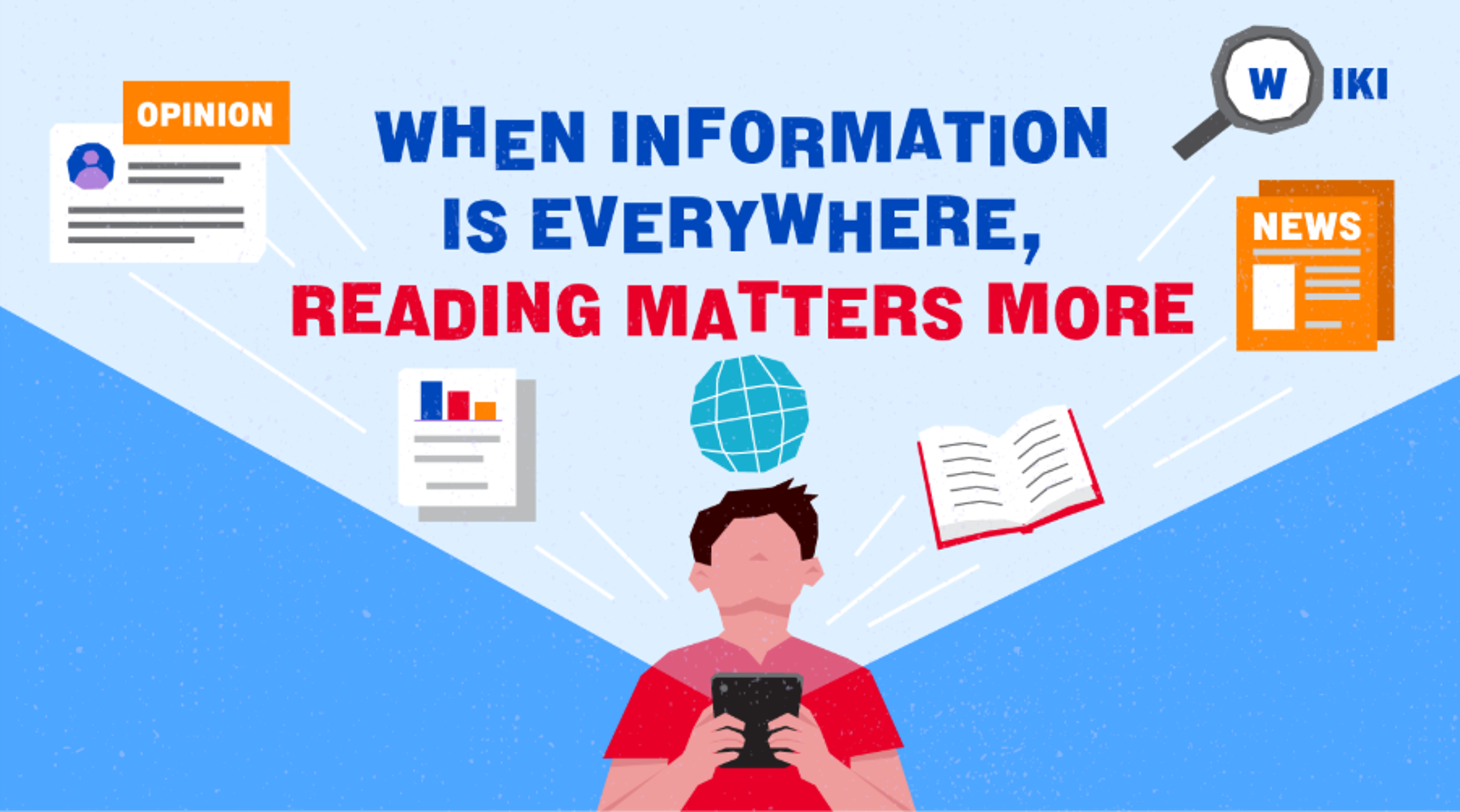
AI can process information in seconds. But reading deeply still builds something harder to outsource: attention, judgement, and the ability to make sense of what we know.
Contributed by Ilyani Suhaimi, Assistant Director/Senior Librarian, National Library Board
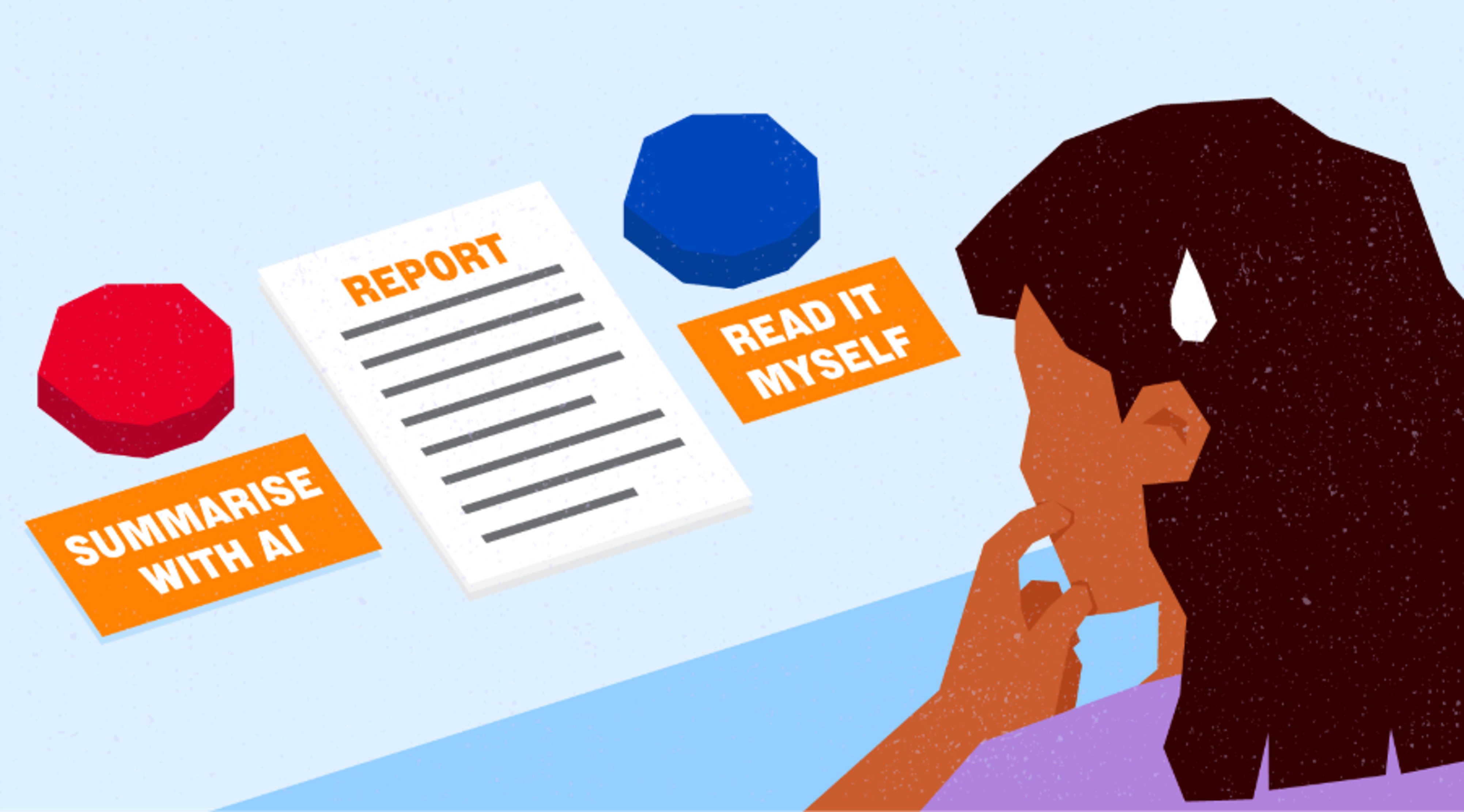
You have a 40-page report to read. Do you read it or ask AI to summarise it?
A colleague forwards a 3,000 word “must-read”. Do you settle in or skim for key points?
Increasingly, we do not lack information. We lack time and attention.
And now that AI can read for us, the trade-off becomes harder to ignore. Are we outsourcing not just reading, but also the thinking skills that come with it?
More than ten years back, Nicholas Carr reflected that the internet was "chipping away my capacity for concentration and contemplation" in his Pulitzer Prize finalist work, The Shallows: What the Internet is Doing to Our Brains.
Since then, how we consume information has transformed again. We move between print, e-books, websites, and other digital formats, while audio and AI offer increasingly convenient ways to access and process ideas and information.
The question is not what or whether we read, but how deeply we engage with what we encounter.
The 40-page Report Problem
You have a 40-page report. It is tempting to ask Generative AI to list the five key points and move on.
And why not? Generative AI can summarise a report, explain a difficult passage, or compare arguments in seconds. Used well, it can help us cut through dense information and focus our attention on where it matters.
But there is a difference between getting the gist of the report and doing the thinking ourselves.
As Naomi Baron explores in Reader Bot: What Happens When AI Reads and Why It Matters, human reading involves more than extracting information. We seek linguistic meaning: we draw upon our life experiences and knowledge to a text and connect it with other ideas, interpreting and questioning it to arrive at our own understanding.
AI processes patterns in language to generate an answer. It is a statistical process which may result in a good job, but it may also give an incomplete summary, miss a weak argument, or overlook an important caveat buried on page 37.
To ask good questions, recognise what might be missing, and judge whether an AI-generated answer is credible, we need knowledge and judgement of our own.
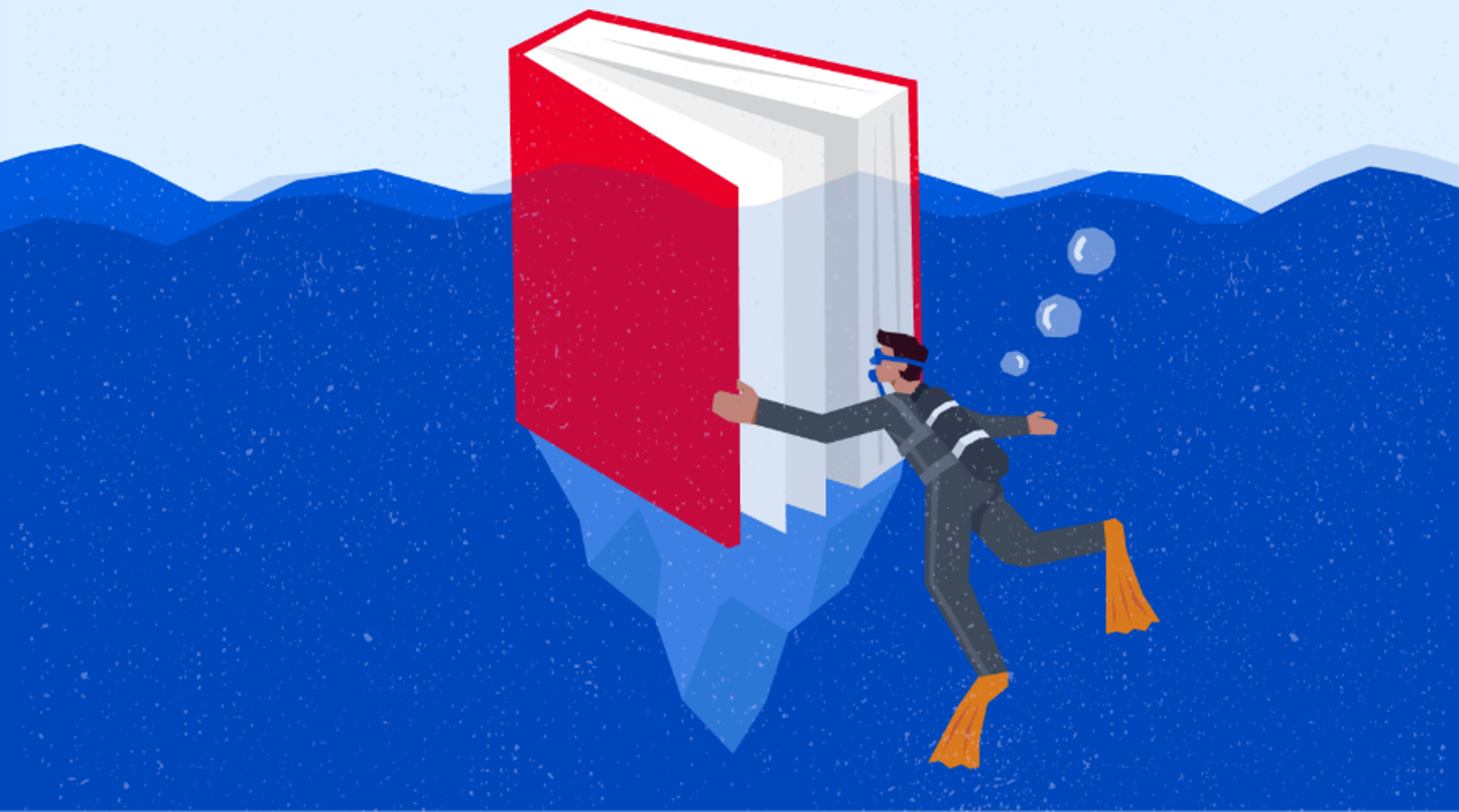
AI helps us to get to the answer faster. Deep reading helps us decide whether the answer holds up.
Why Deep Reading Matters
We are not born to read.
It is a learned skill, one that requires constant cultivation to build neural pathways, connecting language, attention, memory and existing knowledge.
Like any other skill, the ability to read is shaped by how we use it.
Deep reading demands more of us than recognising words on a page. It is how we practise following an argument, connecting ideas, weighing evidence, and forming conclusions of our own.
Cognitive neuroscientist Maryanne Wolf argues in Reader Come Home that deep reading allows us to "go beyond the text" into a space of reflection and independent thoughts. Research has also linked fiction reading with helping to build empathy and social cognition.
In this age of information overload, it is about discerning when a piece of writing deserves our full concentration.
Sometimes, scanning a webpage for a fact is good enough. At other times, we may take time to pore over an essay, work through a complex report, or immerse ourselves in a novel.
The real skill today lies in knowing when speed is sufficient and when something deserves our deeper attention.
Fifteen Minutes Can Make a Difference
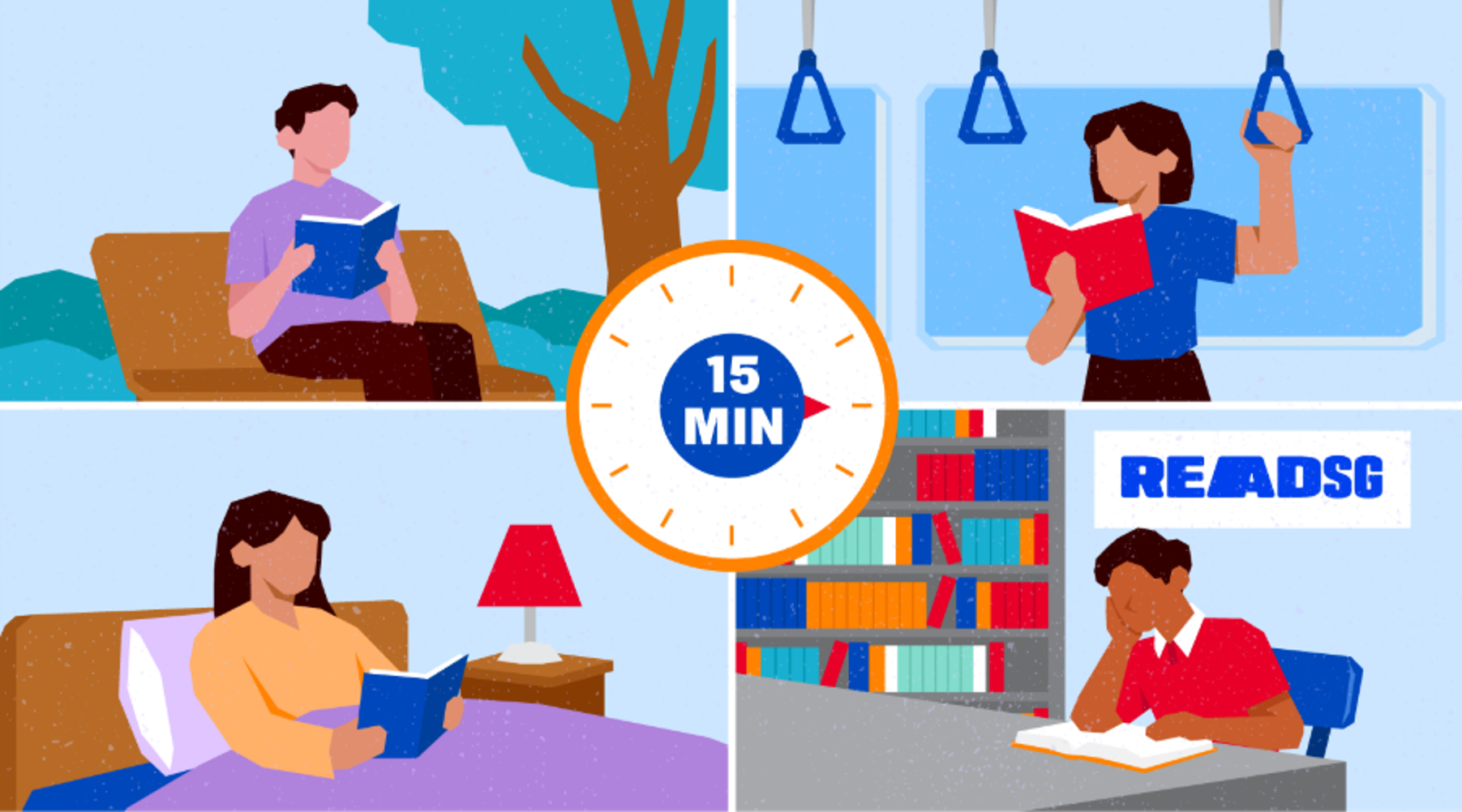
What if all we need is just 15 minutes a day to sustain the ability to deep read?
In Singapore, the National Reading Habits Survey 20245 found that while 89% of adults read more than once a week, only 28% read books.
The Progress in International Reading Literacy Study (PIRLS) 2021 found that 51% of children enjoyed reading, the lowest in a decade, while the proportion of parents who enjoyed reading had also declined—from 53% to 48%.
These figures point to a challenge: reading may still be part of our lives, but sustained reading is getting harder to make time for.
Against this backdrop, the National Library Board (NLB) has launched ReadSG (opens in new tab), a five-year national movement to nurture reading as a lifelong habit.
The idea starts small: set aside 15 minutes to read each day.
But building a national habit would take more than individual willpower. Working with partners across sectors, ReadSG aims to make it easier for reading to start and keep going, across different stages of life.
Building that Human Capability of Making Sense
If information can be found or generated in seconds, what then is the role of the library?
The answer is not just access to information but helping people to make sense of it. This means libraries are evolving, across physical and digital formats, platforms, programmes and spaces.
Physical libraries remain important not because print is inherently superior, but because they provide shared civic spaces for discovery, connection, and encounters with people and ideas beyond what an algorithm might surface for us.
This is also what ReadSG hopes to nurture: the enjoyment, habit, and capacity to engage with ideas attentively throughout life.
In an age of information abundance, we need the capacity to make sense of it. AI can help us process faster. But knowing what to ask, what to trust, and what to do with the answer remains our responsibility.
Just as regular exercise for the body builds physical strength and stamina, a reading habit builds attention and improves our cognitive capabilities, complementing our overall physical and mental health and well-being.
Reading—deeply, critically, and across formats—is therefore more than a leisure habit. It is part of the infrastructure for human intelligence in an AI-assisted world.
Here is a challenge: put your phone out of reach, choose something worth reading and give it 15 uninterrupted minutes. Your notifications will survive.
About ReadSG
Launched on 6 September 2026 during the inaugural National Reading Month, ReadSG is NLB's national movement to make reading a lifelong habit and a shared culture that nurtures curious minds, critical thinkers, and informed citizens.
Together with partners across the government, community and private sectors, ReadSG aims to make reading easier to start and sustain across different stages of life, beginning with a simple invitation to set aside 15 minutes to read daily, and building the environments, programmes and social support that help the habit take root.
Find out more about the movement here: https://www.read.gov.sg/ (opens in new tab)